
Tabgha: The Miracle of the Loaves and Fishes

Updated: Apr 23
Nestled at the foot of the Mount of Beatitudes, Tabgha is a place where the spiritual and the natural worlds meet. Here, the green slopes of the Galilee touch the water’s edge, marking the traditional site of one of the most famous stories in history: the feeding of the 5,000.
If you are planning a Holy Land pilgrimage, Tabgha is more than just a quick stop, it’s a moment to slow down and appreciate the abundance of the Galilee.
The "Seven Springs": Nature’s Ancient Oasis
The name "Tabgha" actually comes from the Greek word Heptapegon, which means "Seven Springs." These warm springs flow into the Sea of Galilee or also known as the Lake Kinneret, creating a unique environment that has drawn people here for thousands of years.
1. The Church of the Multiplication
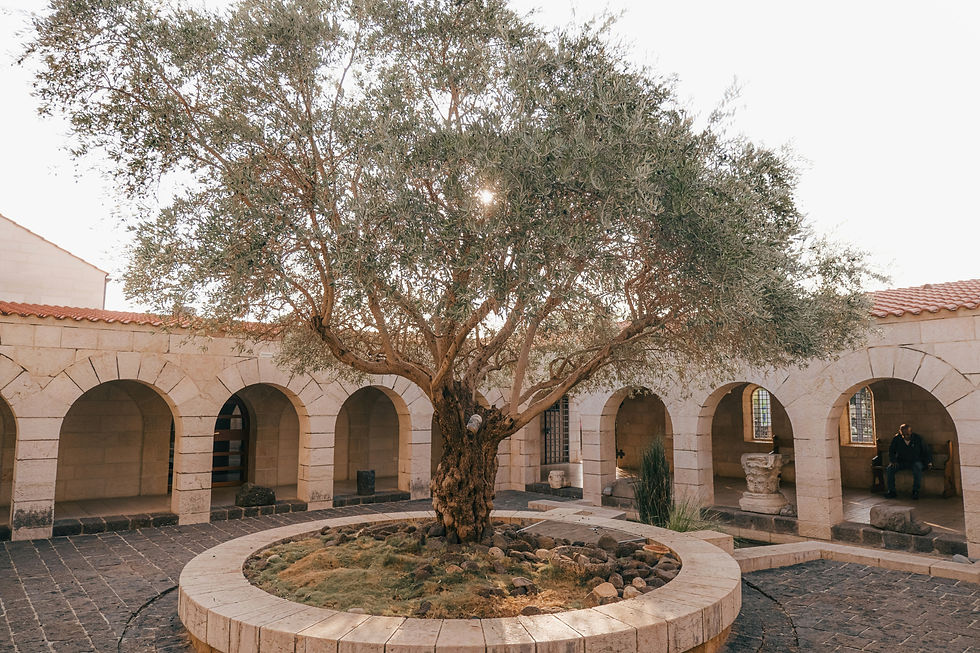
This modern church is built over the ruins of 4th and 5th-century Byzantine chapels. It is famous worldwide for its stunning floor mosaics, which are among the best-preserved in the Middle East.
The "Hidden" Gem: Look closely at the floor near the altar. You’ll see the famous mosaic of the basket of bread and two fish. Notice something strange? The basket only has four loaves of bread.
Fun Fact: Why four loaves? Many believe the "fifth loaf" is the Eucharist itself, or perhaps the "Bread of Life" standing right in front of the altar.
2. The Primacy of St. Peter
Just a short walk along the shore is a humble chapel built of black basalt rock. This site, known as Mensa Christi (the Table of Christ), commemorates the moment where Jesus prepared breakfast for His disciples on the beach after the resurrection.
Family Tip: This is one of the few places where you can walk right down to the water’s edge. It’s the perfect spot for a quiet moment of reflection or to dip your feet into the Sea of Galilee.
Sagi’s "Wise Guide" Tips for Tabgha
The Secret Waterfall: Did you know there is a hidden "hidden" waterfall just outside the main church area? It’s part of the ancient water system and offers a refreshing, cool mist even in the peak of summer.
Timing is Everything: Tabgha can get busy by mid-morning. I recommend visiting here directly after the Mount of Beatitudes. Walking down the "Pilgrim Path" brings you right into the heart of the springs just as the light hits the mosaics perfectly.
Look for the Birds: The mosaics at Tabgha aren't just religious; they are a 1,500-year-old "nature guide." You can find depictions of local Galilee birds, including the heron and the cormorant, still found on the lake today.
Quick Facts for Travelers
Entry: Like most Galilee churches, entry is free, but modest dress (shoulders and knees covered) is strictly enforced.
Water Temperature: The springs at Tabgha are warm! This is why fish gather here in the winter, making it the best fishing spot on the Sea of Galilee for centuries.
Accessibility: The Church of the Multiplication is very flat and easy to navigate for those with limited mobility or families with strollers.

Explore More Northern Adventures:
Step into the miracle and let the springs tell their story. Beyond a tour, this is a journey into a landscape that has provided for the body and the soul for millennia.


Comments