
The Pompeii of Israel: Why Beit Shean National Park is the Best Roman Site Outside of Rome

Updated: Apr 23

If you want to walk down a Roman street that looks exactly as it did 2,000 years ago - complete with shopfronts, mosaic sidewalks, and fallen columns - you don’t go to Italy. You go to the Jordan Valley.
Beit Shean National Park (ancient Scythopolis) is one of the largest and most breathtaking archaeological sites in the world. While other ruins require a lot of imagination, Beit Shean is visceral. Because the city was leveled by a massive earthquake in 749 CE, much of the Roman-Byzantine splendor was "frozen" in time, waiting to be uncovered.
The Pillars of the Decapolis
Beit Shean was the capital of the Decapolis, a league of ten elite Hellenistic-Roman cities. Standing at the center of the park today, you can feel the sheer wealth of the Roman Empire. This wasn't just a town; it was a sprawling metropolis of marble, fountains, and theater.
10 Must-See Highlights of Beit Shean
The Roman Theater: One of the best-preserved in Israel, this 7,000-seat arena still hosts live performances today. Stand on the stage and test the perfect acoustics - you can hear a whisper from the top row.
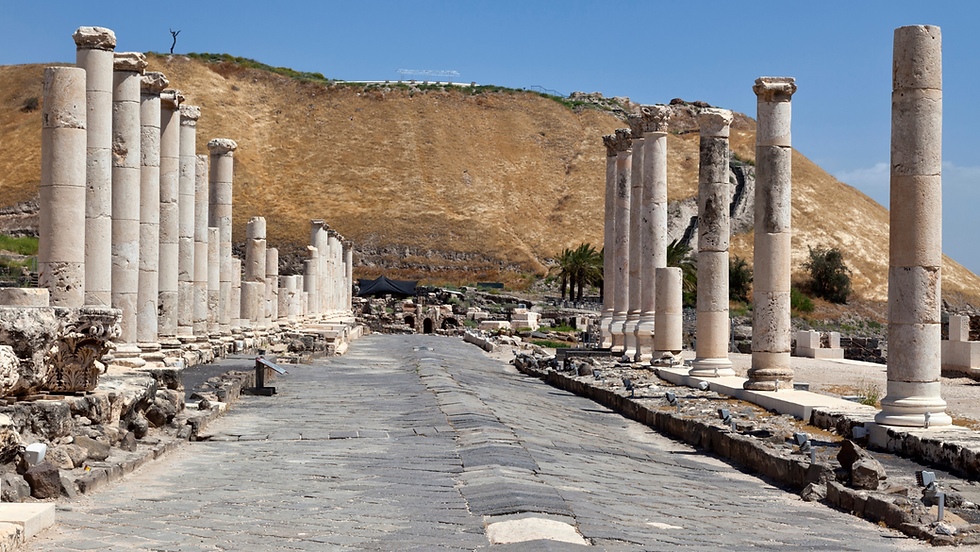
Palladius Street: A 150-meter-long colonnaded road that served as the city’s main artery. Walking its original stones is the closest you’ll get to time travel.
The Byzantine Bathhouse: A massive complex covering 1.5 acres. You can still see the hypocaust (underfloor heating) system that kept the Roman elite warm.
The "Sigma": a unique semi-circular concourse lined with rooms, many featuring intricate mosaics of Tyche, the goddess of fortune.
The Nymphaeum: A grand public water fountain that once flowed with fresh water, showing off the city's sophisticated plumbing.
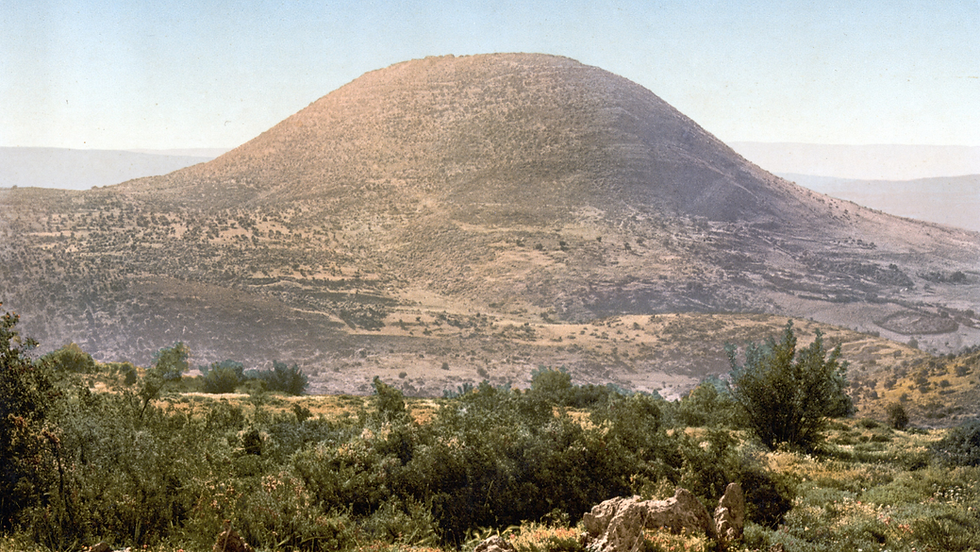
The Ancient Tell: For the best panorama, climb the 106-meter high mound. You’ll see 20 layers of civilization, from Egyptian governors to Israelite kings.
The Earthquake Evidence: Look for the "toppled" columns on Silvanus Street. They all fell in the same direction during the 749 CE quake, a haunting frozen moment of history.
The Gladiator Amphitheater: Located just outside the main civic center, this is where "blood sports" and chariot races took place.
The Public Toilets: A surprisingly popular stop! See how Romans socialized while sitting on a long marble bench with a flowing channel of water beneath.
The Egyptian Governor's House: Located on the Tell, these ruins date back 3,300 years to when Egypt ruled the Levant.
She’an Nights: A Multi-Sensory Masterpiece
In 2026, the "She’an Nights" audiovisual show remains a world-class experience. As the sun sets, the ruins are illuminated by 3D projections, bringing holographic Roman merchants and Byzantine citizens back to the streets. It is the only show of its kind at an archaeological site in the world.
Essential Visitor Information (Updated 2026)
Opening Hours: * Summer: Sunday–Thursday & Saturday: 08:00 – 17:00. Friday: 08:00 – 16:00.
Winter: Sunday–Thursday & Saturday: 08:00 – 16:00. Friday: 08:00 – 15:00.
Entrance Fee: Approximately 30 ILS. (The Night Show is a separate ticket, approx. 55 ILS).
Climate Warning: Beit Shean is one of the hottest places in Israel. In the summer, temperatures often exceed 40°C. Pro-tip: Visit at 08:00 AM sharp or wait for the Night Show to avoid the midday sun.
Accessibility: The main Roman streets and the theater are partially accessible for strollers and wheelchairs.
The Best Way to Visit: The Sagi Levy Way
Because the site is so vast (over 370 acres), it is easy to get "ruin fatigue" or miss the secret mosaic rooms hidden in the Sigma.
The Best Way to Visit: To truly understand the "House of Tranquility," the best way is always with a Sagi Levy Israel Tour Guide. I will lead you through the coolest shaded routes, explain the scandalous social life of the Roman baths, and point out the exact spots where the biblical story of King Saul meets the Roman stones.
Israel’s story of endurance is best told while standing among the fallen marble of a forgotten empire. Don't just see the stones: feel the echo of the Roman crowd and the breathtaking horizons of the Jordan Valley that have seen civilizations rise and fall for 7,000 years.
Join the hundreds of explorers and history buffs who have shared their most epic Israel moments


Comments